A sports backpack for weekend tournaments has to survive a two-day gear cycle, not a single gym session. Saturday morning starts with clean uniforms, court shoes, tape, and a full bottle. Saturday night adds damp practice gear, a towel, and maybe a brace. Sunday morning brings the same load plus snacks, a charger, and a light warm-up layer. A pack that feels fine on Friday can turn into a zipper strain by Sunday noon. Capacity mistakes show up as crushed shoe collars, a wet towel against clean jerseys, and a main zipper that needs two hands to close. The fix is not always a bigger pack. It is the right volume with a layout that separates wet, hard, and clean items.
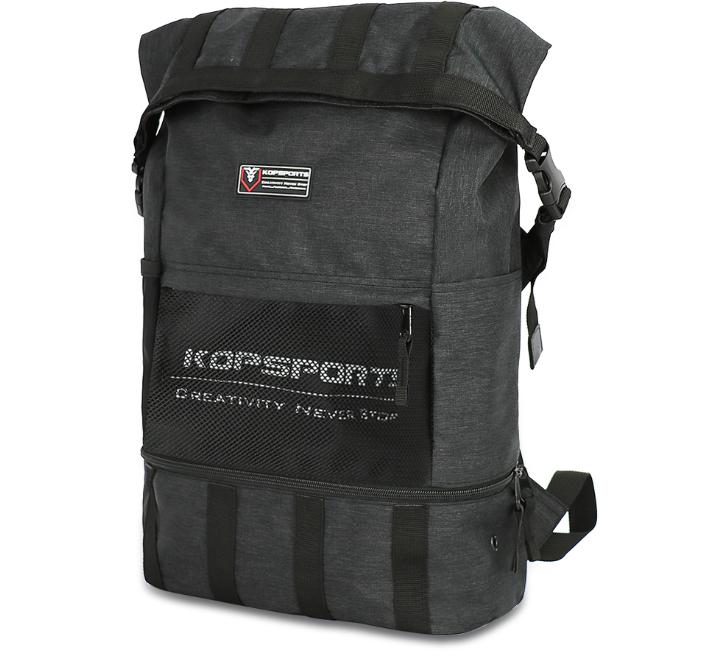
A realistic weekend tournament load for one player usually includes two game uniforms, one warm-up layer, court shoes, flip-flops or slides, two pairs of socks, compression wear, a knee sleeve or brace, a towel, a 1 liter bottle, snacks, a phone charger, tape, and a small first aid kit. Team gear may add a ball, a pump, and a clipboard. Shoe size changes the math more than any other item. A US men's size 12 basketball shoe is roughly 13.5 inches long, and a high collar adds height. Two pairs of shoes, court and recovery, can eat 8 to 10 liters of packed volume before clothing goes in. A ball adds another 7 to 8 liters of effective space because round objects waste corners. That is why a 30 liter sports backpack can feel tighter than a 38 liter pack with a separate shoe zone.
Capacity numbers on a sports backpack product page are measured in different ways, and a simple liter count does not show how much usable space remains after shoes and a ball. The table below uses a practical packed load, not a laboratory fill.
| Capacity range | Typical weekend load | Main advantage | Watch-out |
|---|---|---|---|
| 20 to 25 liters | One uniform, one shoe pair, towel, bottle | Light and quick for single-day play | Shoe collar compresses, no room for damp gear |
| 30 to 35 liters | Two uniforms, one or two shoe pairs, towel, bottle, snacks | Best balance for most weekend tournaments | Needs a real shoe zone, not a thin sleeve |
| 40 to 45 liters | Two uniforms, two shoe pairs, ball, pump, warm layer | Handles team gear and cold weather layers | Can feel wide on bleachers and crowded buses |
| 50 liters and up | Multi-player gear or overnight clothing | High volume for coach or team manager | Heavy when loaded, harder to carry up stairs |
For most players at a weekend tournament, 30 to 35 liters is the sweet spot when the pack has a separate shoe compartment and a vented wet pocket. A 40 to 45 liter sports backpack makes sense for coaches, team managers, or players who carry a ball and a second shoe pair. The larger pack is not automatically better. Extra volume invites overpacking, and a heavy pack changes shoulder load and balance.
A 35 liter sports backpack with a flat base, a structured shoe compartment, and two small organizers can outperform a 45 liter duffel with one deep cavity. Shoes belong at the bottom or in a side compartment with a rigid panel, so they do not crush clean jerseys. Wet gear needs a separate lined pocket, preferably with a drain grommet. Small items such as tape, charger, and pain relief wipes disappear in a deep main compartment, so a top-access pocket or a lid organizer helps. Compression straps matter on a half-full pack because they keep the load from shifting during a bus ride. A padded back panel and wide shoulder straps are not luxury features on a loaded weekend pack. They are the difference between a comfortable walk from the parking lot and a sore shoulder before the first whistle.
At a regional two-day tournament in a humid southern gym, a team manager compared three packs on the bench before the first match. A 28 liter pack held one shoe pair, two uniforms, and a towel, but the shoe collars pressed against the main zipper, and the damp towel had to sit on top of clean jerseys. A 38 liter pack kept shoes flat and had a wet pocket, yet it felt wide on the bleachers and snagged on a folding chair. A 34 liter pack with a side shoe compartment, a vented wet pocket, and two compression straps carried the same load with less bulk. The lesson was specific. The winning pack was not the largest. It had the right zones and a base that stayed flat when loaded. The 38 liter pack still made sense for the coach who carried a ball and a pump.
Weekend tournaments punish zippers, seams, and base panels. A pack that travels by car, bus, and gym floor sees repeated loading and unloading, plus abrasive contact with benches and concrete. Fabric breaking strength and seam slippage are useful checkpoints. ASTM D5034 covers fabric breaking strength, and ASTM D1683 addresses seam slippage. These standards do not promise a perfect pack, but they give buyers a common reference before a sample is approved. A standardized testing process should also check zipper reciprocation, handle attachment, and loaded shape with shoes and a full bottle in place. Material durability, craft accuracy, and structural stability need uniform checks before release. A strict quality control system catches inconsistencies that a visual inspection misses. Kopsports, the short name behind this sports bag maker, supports that kind of process with annual output above six million bags, roughly 40 percent wheeled, thousands of skilled workers, and a specialized roller equipment bag facility. Capacity is a number on a label. The layout and the testing behind it decide whether a weekend tournament pack works on Sunday afternoon.

 EN



 Hot News