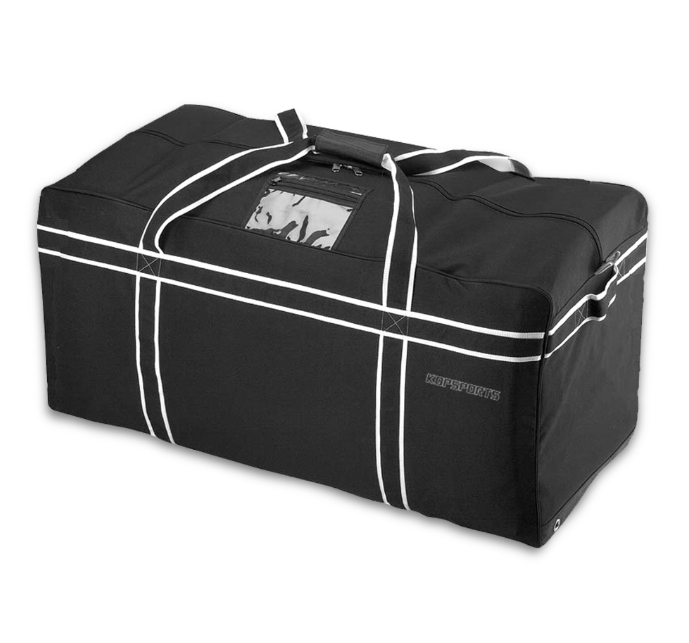
A hockey bag lives in a tougher climate than most sports bags. It sits on cold concrete, gets dragged across wet rubber mats, and spends hours in a vehicle that swings between heated air and freezing air. The bag is not just carrying gear. It is holding damp pads, skates, and towels that release moisture and salt. Cold makes coated fabrics stiffer, seams less forgiving, and hardware more brittle. A material that feels flexible in a warm office can crack at a rink entrance in January.
That is why durability testing for a hockey bag has to include low temperature behavior, not just room temperature strength. A bag can pass a standard tensile test and still fail when the same material is folded at freezing temperatures. The tests that matter most are the ones that reproduce the combined stress of cold, abrasion, moisture, and load.
Cold cracking is one of the most common hidden failures in rink gear. Coated fabrics and laminated panels stiffen as temperature drops. If the coating loses flexibility, a simple fold near a zipper or handle root can start a crack. ASTM D746 covers brittle temperature testing for plastics and elastomers. ASTM D2136 addresses low temperature bend behavior for coated fabrics. Both are useful reference points because they push materials into the range where rink bags actually operate.
A practical test plan should bend the material at a defined low temperature, then inspect the fold line for cracks, whitening, or coating separation. The test should be repeated on seams, not just flat panels. A seam that uses a stiff tape or heavy coating may fail before the base fabric does. The goal is not to find the coldest possible limit. The goal is to confirm that the material and seam system stay intact through normal winter handling.
Rink floors are abrasive. Concrete, rubber matting, and the metal edges of benches all attack the base of a hockey bag. ASTM D3884 Taber abrasion testing gives a repeatable wear reference. ASTM D2261 covers tongue tear strength, which shows how a material resists a tear once a small cut starts. ASTM D5034 covers fabric tensile strength and provides a baseline for the base material.
| Test area | Common reference | What it reveals | Typical failure in cold rinks |
|---|---|---|---|
| Low temperature bend | ASTM D2136 | Coating flexibility at cold | Cracks along fold lines |
| Brittle temperature | ASTM D746 | Cold impact resistance | Shattered hardware or coating |
| Taber abrasion | ASTM D3884 | Surface wear resistance | Worn base fabric near wheels |
| Tongue tear | ASTM D2261 | Tear propagation | Rips from a small cut |
| Fabric tensile | ASTM D5034 | Base material strength | Tear at stress point |
| Seam slippage | ASTM D1683 | Yarn pullout under load | Open seam at handle root |
The table is a starting point, not a pass certificate. A high abrasion number on a flat panel does not prove that a seam or wheel housing will survive a season. The test result has to be matched to the actual stress zone.
Cold rink environments are not dry. Melted ice, slush, and road salt travel with the bag. A hockey bag often sits in a puddle of meltwater in a vehicle trunk. Water absorption can add weight and reduce insulation. Salt can corrode metal hardware and stiffen zipper tapes. Freeze and thaw cycles can open small gaps in coatings and seam tape.
A sensible durability review should include water resistance testing, such as AATCC 127 for hydrostatic pressure, plus corrosion checks on zippers, rings, and buckles. Salt spray testing, often referenced through ASTM B117, is a useful proxy for winter road exposure. These tests do not perfectly reproduce every rink parking lot, but they catch hardware and coating systems that fail early.
During a midwinter equipment audit at a rink in the Upper Midwest, staff inspected thirty hockey bags after six weeks of league play. Several bags showed cracks along the top fold line near the zipper. The base fabric looked intact, and the seams were still holding. The failure was in the coating, which had stiffened and cracked after repeated cold folding. Another group of bags had worn base corners and loose wheel screws. A third group had corroded zipper sliders from salt exposure.
The audit did not need a full laboratory. It needed a cold rink, a checklist, and a close look at fold lines and hardware. The pattern matched what low temperature bend, abrasion, and corrosion tests are designed to catch. That field evidence is why a hockey bag program should test the whole material system, not just one headline fabric number.
A useful plan combines several checks and states the limits honestly.
Test low temperature bend on panels and seams at defined rink temperatures.
Run brittle temperature checks on hardware and coated materials.
Use Taber abrasion on base corners and wheel housings.
Test tear and tensile strength on the base and handle root zones.
Check water resistance and salt spray on hardware.
Compare results across multiple samples and material lots.
No test plan can predict every failure. A player who overpacks a bag or drags it across rough concrete can create stress that lab tests do not fully capture. The point is to reduce predictable cold weather failures and to give buyers comparable data.
For buyers building a hockey bag program, Kopsports supports cold climate durability work with large scale bag output, specialized roller equipment, and a strict quality control system before release. The company short name is a practical reference when repeat orders need consistent material and seam testing across every lot.

 EN




 Hot News