A helmet bag that stays in a car trunk or a locker room sees a mild life. An outdoor helmet bag does not. It gets set on wet grass, strapped to a cart, dropped in a gravel lot, and left in a truck bed while the weather changes. Water resistance matters because helmets and pads hold moisture against the liner. Material durability matters because a water-resistant coating that cracks or rubs away stops being water resistant at the exact fold and seam where water enters. The two properties are not separate selling points. They are one system. A coating that survives a spray test but fails at a crease after a month of use is not protecting the helmet inside.
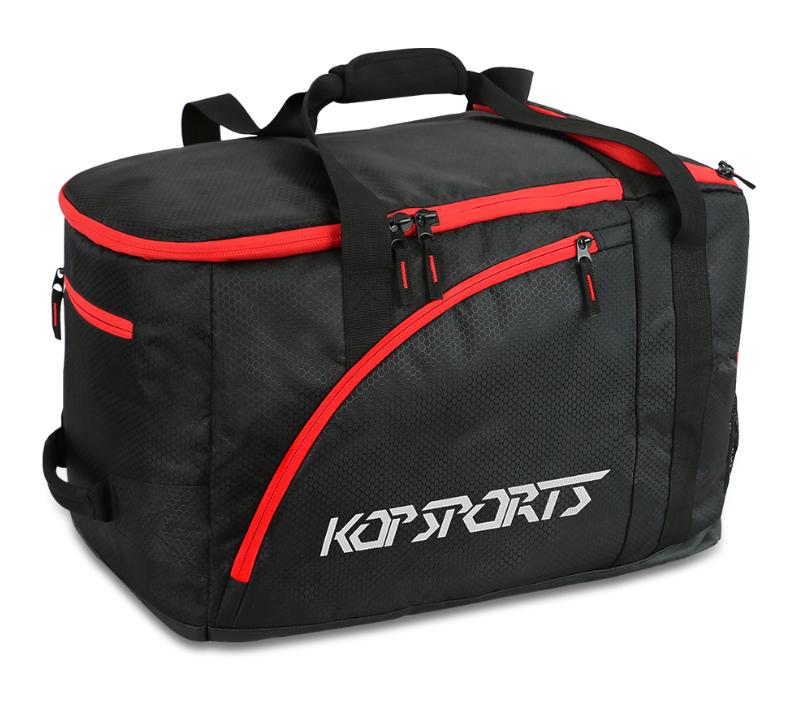
Most water-resistant fabrics rely on a coating or a tight weave plus a finish. Both can degrade. A coating on a woven shell flexes every time the bag is folded, stuffed, or sat on. At a sharp fold, the coating stretches and can crack. Once cracked, water moves along the crack and into the fabric. Seams are the other weak point. Every needle hole is a path for water. Taped seams and bound edges help, but only if the tape and thread hold up. A durable water-resistant material keeps its coating through flexing, abrasion, and UV exposure. A material that only passes a new-out-of-box spray test is not durable in any useful sense.
Polyurethane and PVC coatings behave differently in wet storage. PVC is heavy and stiff, and it can plasticize over time. Polyurethane is lighter and more flexible, but some formulations are sensitive to hydrolysis when stored damp. A helmet carrier left in a humid equipment room for weeks can lose coating flexibility before the outside looks worn. UV exposure adds another path. A bag left in a truck bed or on a sideline can chalk and fade, and the coating can embrittle. A practical spec should combine a base fabric with good grab tensile, a coating with a known hydrolysis rating, and a seam construction that keeps needle holes closed. Standards such as ASTM D5034 for grab tensile and ASTM D1683 for seam slippage give a baseline for fabric and seam behavior. AATCC 35 spray rating and ISO 811 hydrostatic head give a baseline for water resistance. None of those tests alone proves field life, but together they catch weak material lots before they reach the line.
At a high school outdoor sports program in the Pacific Northwest, a set of helmet bags spent a rainy fall season in a covered but unheated equipment room. The bags were loaded with helmets and shoulder pads, then stacked. By midseason, players reported damp helmet liners after a weekend. A check found the shell coating had cracked along the top fold and at the seam where the handle webbing met the body. The fabric itself was intact. The coating had failed first. A switch to a heavier coated shell with bound seam edges and a longer bar tack at the handle anchor solved the damp liner complaint. The bag did not become waterproof. It became durable enough to keep rain out during normal handling. That distinction matters. Water-resistant gear is not meant for submersion or long soaking. It is meant to shed rain and resist wet surfaces during transport.
A single spray rating on a new sample says little about a bag that gets folded and dragged. Batch data and construction checks tell a more useful story. The table below compares common material and construction points in a simple release check. The values are representative ranges, not a promise for every design.
| Check point | Method | Typical target | Common failure | Release action |
|---|---|---|---|---|
| Shell grab tensile | ASTM D5034 | 120 lb minimum | Weak fill yarn | Hold lot |
| Seam slippage | ASTM D1683 | 0.2 in max at 50 lb | Loose weave at seam | Review seam allowance |
| Spray rating | AATCC 35 | 80 or higher after flex | Coating cracks at fold | Recheck coating lot |
| Hydrostatic head | ISO 811 | 1,500 mm minimum | Thin coating at edge | Reject affected rolls |
| Handle anchor | Static pull, 100 lb | No stitch rupture | Short bar tack | Adjust stitch pattern |
| Zipper end | Cyclic open and close | No seam pull after 1,000 cycles | Needle cut | Change needle size |
Material durability is not only a factory question. How the bag is loaded changes how long the coating lasts. A helmet bag stuffed past its volume puts constant tension on seams and folds. A wet helmet placed inside without a drain path keeps moisture against the liner and the coating. A bag left in direct sun for days can embrittle the shell. Simple habits help: shake out water before loading, avoid overstuffing, and store the bag open and dry when possible. Those habits do not replace good material selection, but they slow the wear that leads to seam leaks. KOP builds helmet bag and sports bag programs at scale, with annual output above 6,000,000 pieces, about 40% wheeled bags, thousands of skilled workers on sports bag lines, and a specialized roller equipment bag facility focused on durable materials and heavy duty construction. That kind of capacity supports consistent material testing and release checks, which matters when an outdoor helmet bag has to shed rain season after season.

 EN





 Hot News