 EN


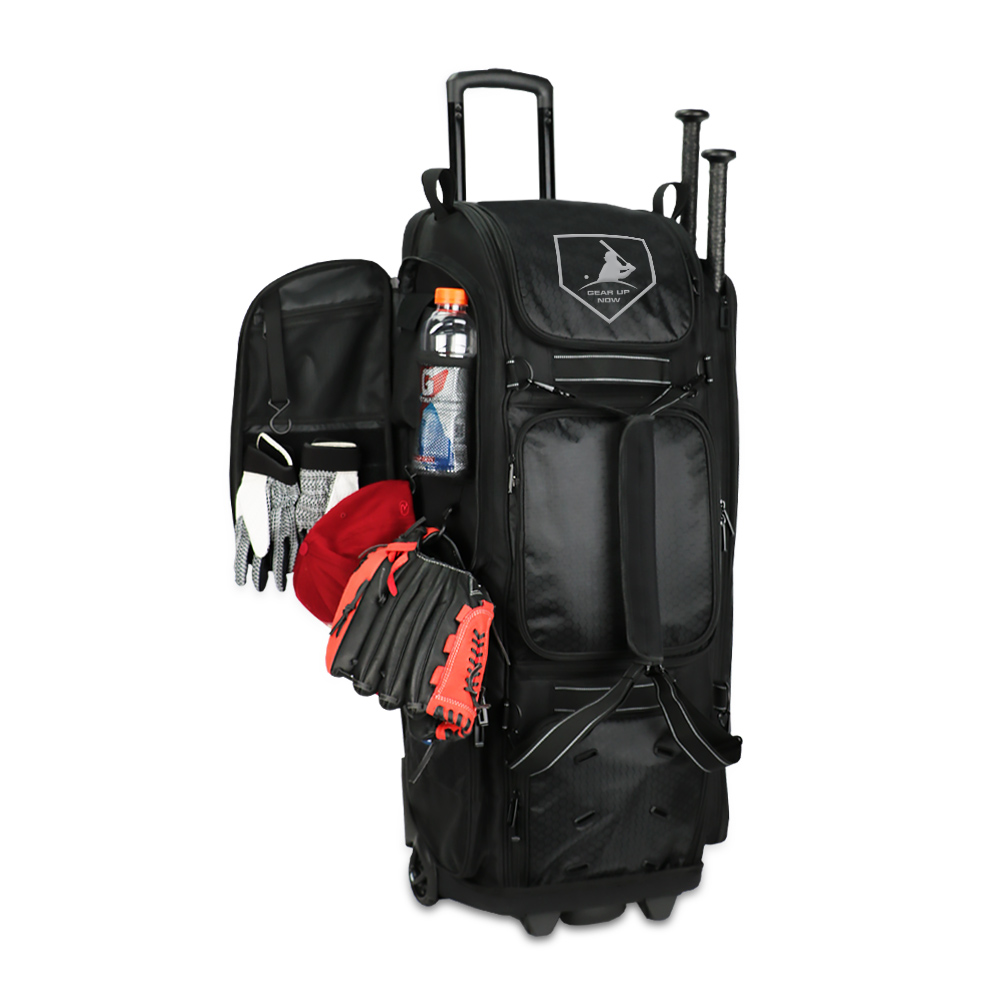
What are the benefits of a heavy-duty softball bag with wide-set all-terrain wheels?
A full softball bag changes the walk from the parking area to the field. Add bats, a helmet, glove, cleats, water, layers, and small accessories, and the issue is no longer simply whether everything fits. It is whether the load stays organized and manageable over turf, gravel, packed dirt, curbs, and uneven walkways. For players, parents, coaches, and teams, a heavy-duty softball bag with wide-set all-terrain wheels can address that transport routine in a practical way.
From a sports bag design consultant’s perspective, the useful question is not “does it have wheels?” It is how the wheel layout, base, handle, compartments, and expected equipment work together. A large softball bag can help—more precisely, it helps when its loading plan and wheel system suit the way it will be used.
Why a wheeled softball bag matters when gear gets heavy
A softball bag is often carried when the player is already managing a bat, drink, jacket, or gate. Rolling the main load can reduce the need to keep that weight on one shoulder during the approach to the diamond. This is particularly relevant for tournament days, shared team transport, catcher equipment, or long routes from a remote parking area.
That benefit depends on the route. A compact backpack may be easier on stairs or in tight bleachers, while a wheeled softball bag becomes more compelling when the path includes pavement, turf edges, compacted dirt, or a long walkway. The next question is whether the bag remains stable and easy to steer when it is full.
What wide-set all-terrain wheels add
A wider stance can improve loaded stability
Wide-set wheels place the rolling contact points farther apart than a narrow wheel arrangement. In practical terms, that can make a loaded softball bag less prone to leaning when it crosses a rough patch, follows an angled path, or pauses while the handle is released. It does not make any bag immune to tipping; packing height, base shape, wheel position, and how quickly the bag is pulled still matter. But a wider footprint gives the designer more support under a tall, gear-heavy load.
This distinction matters because wheel size and wheel stance solve different problems. Larger wheels can roll over small obstacles more readily than small hard wheels. A wide stance focuses on balance. A softball bag intended for variable field access benefits when both features are evaluated together rather than treated as one generic “all-terrain” claim.
Better route flexibility around the field complex
All-terrain wheels are useful when the route changes from smooth pavement to a turf edge, packed soil, or a coarse parking surface. The objective is not speed; it is predictable movement with fewer abrupt catches. For a softball bag used only inside a smooth indoor facility, that construction may be unnecessary. For a bag that travels through outdoor complexes, it can be a reasonable design priority.
Before specifying a roller, map the route from vehicle to dugout. Note curbs, drainage grates, gravel, sloped ramps, and the distance between fields. That simple exercise often reveals whether a standard carry bag is enough or whether a wheeled softball bag will suit the routine better.
Heavy-duty construction supports the wheel system
Wheels do not work in isolation. On a heavy-duty softball bag, the base and wheel mounts take repeated loads whenever the bag is pulled over transitions or set upright. Look for a structured base, protected wheel housings, and reinforcement where the handle and chassis meet the bag body. These are construction points to examine in a product specification or sample; they are not a substitute for reviewing the actual intended load.
Fabric, zippers, seams, and corners deserve the same attention. A player may pack equipment in a different order every week, but the high-contact zones remain predictable: bottom edges, wheel area, handle connection, zipper ends, and bat sleeves. A heavy-duty softball bag should be assessed around these use moments, not only by its empty appearance.
Organization protects the mobility benefit
A rolling softball bag is easier to control when heavy items sit low and closer to the wheel base. Put dense gear such as cleats or a glove in lower sections where the layout allows, then place lighter layers and accessories above. This is not a universal packing rule—compartment geometry varies—but it is a useful starting point for evaluating a bag’s center of mass.
Separate storage also supports a faster routine. A ventilated shoe area, bat sleeves, helmet space, and small-item pockets can reduce the need to unpack the main compartment at the fence. The capacity side of the decision is important. The next question is whether those items remain easy to reach when the softball bag is full.
- List what travels on every practice or game day.
- Identify which items are heavy, wet, long, fragile, or needed first.
- Check whether the base keeps the packed load upright.
- Pull the bag over the surfaces it is likely to encounter.
- Confirm that the handle height and grip suit the intended user.
Who gains the most from this format?
A heavy-duty softball bag with a wide wheel stance is often a strong fit for players who bring multiple bats, a helmet, footwear, and layers to outdoor fields. It can also suit coaches moving shared gear or catchers carrying a larger equipment list. Travel teams may value the repeatable packing and rolling routine between parking, lodging, and fields.
It may be less suitable for a player whose route includes stairs every day, whose load is minimal, or who needs a bag that stores in a very narrow space. Fit-first advice matters here: a softball bag should match the equipment, route, and storage environment rather than follow a single format for every player.
A buying checklist for a wide-wheel softball bag
| What to inspect | Why it matters | Question to ask |
|---|---|---|
| Wheel spacing and diameter | Influences balance and obstacle handling | Does the wheel layout suit the surfaces on the usual route? |
| Base and wheel protection | Supports the rolling chassis under a packed load | Are the bottom and wheel-mount areas structured for the intended routine? |
| Handle construction | Shapes control while pulling | Is the handle comfortable at the user’s walking height? |
| Compartment layout | Helps keep priority gear accessible | Can bats, footwear, helmet, and small items be reached without emptying the bag? |
| Storage footprint | Affects home, vehicle, and dugout use | Will the upright bag fit the expected storage spaces? |
Conclusion
The main benefit of a heavy-duty, wide-wheel softball bag is not simply that it rolls. Its value comes from combining a stable stance, terrain-aware wheels, a supportive base, and accessible organization for a real equipment routine. Compare those elements against the player’s load and route, then validate them in a sample or product specification. That approach makes it easier to choose a softball bag that supports game-day movement without relying on broad claims.



 Hot News