A helmet bag that opens only at the top forces a choice between speed and protection. The rider or crew member has to fish the helmet out through a narrow throat, and the shell often rubs against the zipper tape on the way out. A two-way zipper changes that geometry. Two sliders meet in the middle and can part in either direction, so the opening can be widened at the exact spot where the helmet sits. In a pit lane, where a few seconds decide whether a driver is strapped in before the next session, that difference is practical, not cosmetic.
The two-way layout also helps when the bag is packed tight. A single slider has to travel the full length of the track. Two sliders can meet near the helmet crown, which shortens the travel distance and reduces the chance of a jam under load. The benefit is not about opening the whole bag. It is about opening the right section quickly.
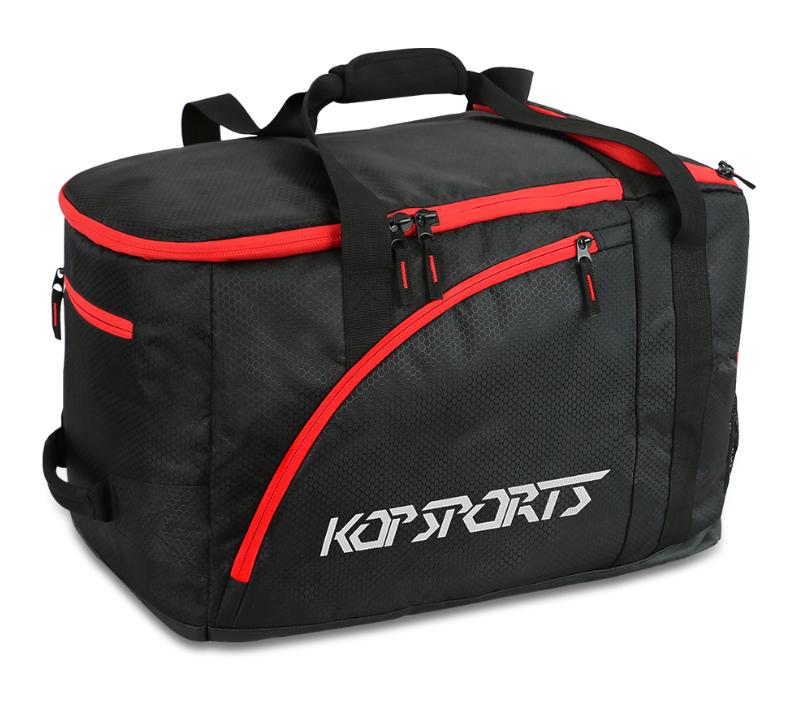
A standard zipper has one slider and two end stops. A two-way zipper has two sliders that face each other or sit at opposite ends, depending on the design. When both sliders move toward the center, the opening becomes a wide mouth. When they move apart, the bag closes from the middle outward. For a helmet bag, the useful configuration places the sliders so they can meet above the visor area. That lets the helmet lift out without dragging across the crown.
Zipper strength matters as much as slider count. ASTM D2061 covers strength tests for zippers and gives labs a way to compare chain and slider performance under pull loads. A two-way zipper with weak sliders can still split under a heavy pull. The hardware should match the load, and the tape should be anchored to a reinforced panel. A wide opening is only useful if the zipper stays closed when the bag is carried.
Pit-lane work often happens with gloves on. Small slider pulls are hard to grab, and a zipper that needs two hands slows everything down. A two-way helmet bag should have oversized pulls, cord loops, or molded tabs that a gloved finger can catch. The sliders should move smoothly without a hard break-in period. A stiff slider encourages yanking, and yanking distorts the tape.
A simple field check is to open the bag with one hand while the other hand holds a helmet or a tool. If the slider needs a second hand to start, the pull is too small or the track is too tight. The same check applies when closing. A two-way zipper that closes easily from the center saves time when the helmet goes back in.
| Opening style | Time to clear a full-face helmet | One-hand access | Helmet exposure while open | Common failure mode |
|---|---|---|---|---|
| Single top zipper | 7 to 10 seconds | Poor | Low | Tape wear at the throat |
| Single full-length side zipper | 5 to 8 seconds | Fair | Medium | Slider jam under load |
| Two-way zipper meeting above visor | 3 to 5 seconds | Good | Controlled | Weak pulls or unanchored tape |
| Two-way zipper with wide U-shaped track | 3 to 6 seconds | Good | High | Fabric caught in slider |
A wide opening can expose the helmet to dust, rain, and pit-lane debris. The bag should have a top flap or a hood that covers the opening when the zipper is partly open. Interior padding should hold the shell away from the zipper teeth. A helmet that rests directly against the track can get scratched every time the bag is opened.
The two-way zipper should not be treated as a full-access door. It is a controlled opening. The sliders can meet at the visor area, leaving the rest of the bag closed. That keeps the helmet protected while giving the hand a clear path. A mesh vent panel near the opening helps with airflow without exposing the shell to grit.
During a regional karting endurance event, one crew member used a helmet bag with a two-way zipper that met above the visor. The pit box was narrow, and the driver had to change helmets between stints. The crew member reached in with one gloved hand, parted the sliders, and lifted the helmet out in about four seconds. The neighboring team used a top-opening bag and needed both hands to widen the throat. Their helmet came out after eight seconds, and the visor caught the zipper tape on the way.
The difference was not a faster crew. It was the opening geometry. The two-way bag let the hand go straight to the helmet crown. The top-opening bag forced the hand to angle through a narrow gap. In a pit lane, that angle costs time and adds scratch risk.
A few checks separate a useful two-way zipper from a marketing feature. 1. Pull both sliders to the center and confirm they meet without forcing. 2. Look for reinforced tape at the slider meeting point, since that area takes repeated stress. 3. Check that the pulls are large enough for a gloved hand. 4. Open the bag halfway and see whether the helmet stays away from the teeth. 5. Close the bag from the center and confirm the track does not buckle.
A two-way zipper is not a replacement for careful packing. A helmet that is too large for the bag will still press against the track, and a wet helmet should be dried before storage. The feature works best when the bag is sized correctly and the zipper hardware is built for repeated use. KOP supports that build through high-volume sports bag production, a specialized roller equipment bag facility, and a standardized quality control system that checks every bag before release. A quick pit-lane exit depends on small details, and the zipper is one of the first places to look.

 EN




 Hot News