A zipper that glides on an empty baseball bag can fight back once the bag is packed with helmets, cleats, and a dozen bats. The reason is geometry, not bad luck. When a bag is overstuffed, the two zipper tapes pull apart at an angle instead of meeting flat. The slider has to force the teeth together while the fabric is under tension, and that tension increases friction along the chain. Add a little dirt from a dugout floor or a stray thread, and the slider stalls. Most zipper failures on loaded bags are not broken teeth. They are misalignment and friction caused by load pressure. Understanding that mechanism is the first step to preventing jams, because it shifts the fix from force to load management.
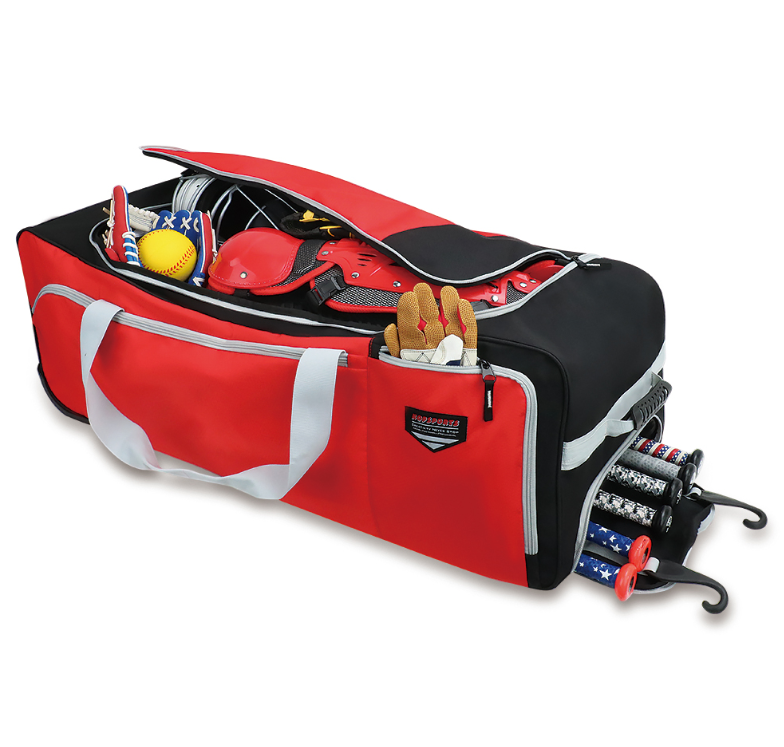
A baseball bag carries weight in a specific pattern. Bats sit along the length, helmets press against the top, and cleats drop to the bottom. If that weight pushes outward against the zipper line, the slider has to work against the bag itself. Good packing keeps the load away from the closure. That means placing heavy items toward the base and center, and leaving a small gap near the zipper track. A bag that is packed to the seam line will always jam, no matter how good the zipper is. Three practical habits help:
Pack bats along the bottom or in an external sleeve so they do not bow the side panels outward.
Keep helmets and hard gear away from the zipper track, since they create sharp pressure points.
Leave a finger-width of slack near the closure so the tapes can meet flat.
These habits cost nothing and remove most of the load pressure that causes jams.
Technique matters as much as packing. The common mistake is pulling the slider with one hand while the other hand holds the bag by the strap. That angles the bag and twists the zipper track. A better approach uses both hands: one to hold the tapes flat ahead of the slider, the other to pull the slider at a steady pace. Pulling too fast creates heat and friction, and it gives the slider no chance to align the teeth. If resistance appears, stop and back up a few inches rather than forcing through. Forcing a stuck slider is how teeth get bent and how the pull tab snaps off. A slow, two-handed pull with the bag resting flat on a bench or the floor solves most jams before they start.
A high school program in the Southwest replaced zippers on six baseball bags in one season. The hardware was from a reputable supplier, and the bags were not old. A closer look at how the bags were packed explained the pattern. Players were loading bats vertically against the side panel, which bowed the fabric outward along the zipper line. The slider was fighting a curve, not a straight track. The team changed the routine: bats went into an external sleeve or along the bottom, and helmets were placed away from the closure. Zipper jams dropped sharply over the next two months, with the same bags and the same zippers. The hardware was never the problem. The load path was. This is a common pattern in the field, and it is why packing discipline often outperforms hardware upgrades.
Zipper performance can be compared with standard methods and simple field measurements. ASTM D2061 covers zipper strength, including pull tab and slider resistance. The table below uses representative field observations from loaded bags, not a certified lab report. The figures are approximate and vary with bag size, zipper gauge, and load type.
| Loading condition | Slider resistance | Jam frequency | Common outcome |
|---|---|---|---|
| Light load, flat track | Low | Rare | Smooth closure |
| Heavy load, bats against side panel | High | Frequent | Bent teeth, broken pull tabs |
| Heavy load, bats in external sleeve | Moderate | Occasional | Manageable with slow pull |
| Heavy load, slack near closure, two-hand pull | Low to moderate | Rare | Reliable closure under full load |
The data shows a clear pattern. Load placement and pull technique change zipper behavior more than most players expect. Hardware quality still sets the ceiling, but packing decides whether that ceiling is reached.
No packing trick makes a weak zipper strong. A size 8 nylon coil zipper on a heavily loaded bag will always be closer to its limit than a size 10 molded plastic or metal zipper. Cold weather makes plastic teeth brittle, and grit from a field or a parking lot accelerates wear. A zipper that has been forced repeatedly will develop bent teeth that no technique can fix. The honest position is that jam prevention works within the design limits of the bag. It reduces friction and misalignment, but it cannot compensate for an undersized zipper or a bag packed beyond its structure. Knowing those limits helps set realistic expectations and points to the real fix when jams keep happening: check the zipper gauge and the bag's rated load, not just the packing method.
A zipper that jams under load is often a production issue before it is a user issue. Tape alignment, stitch distance from the teeth, and slider quality all affect how a zipper behaves when the bag is full. KOP runs high-volume bag production with an annual output of more than 6,000,000 pieces, including a large share of wheeled bags, and every unit goes through a standardized testing process before release. Material durability, craft accuracy, and structural stability are checked under a strict quality control system. For a baseball bag, that discipline shows up in zipper tapes that run parallel, stitch lines that stay clear of the teeth, and sliders that pass a cycle test before the bag ships. The result is not a zipper that never jams. It is a zipper with a measured baseline that gives packing discipline a fair chance to work.

 EN



 Hot News