A 12-racket tennis bag carries a lot of concentrated weight. Twelve frames, plus towels, balls, water, and shoes, can push a soft bag past the point where it holds shape. The structure depends on more than thick fabric. It depends on a base panel that spreads load, side walls that resist bowing, dividers that keep frames from sliding into one pile, and a handle path that transfers force without pulling one seam. When any of those parts drift, the bag starts to sag, lean, or twist. That change is easy to miss because it happens slowly. A bag that felt stable in the store can feel mushy after a season of being packed to the limit. Structural stability is not a one-time feature. It is a condition that has to be maintained.
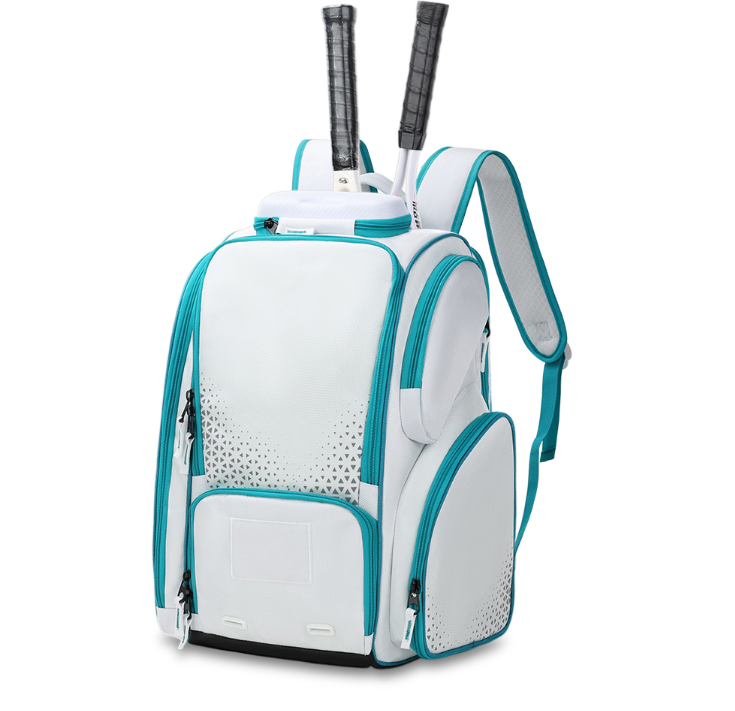
The fastest way to shorten a tennis bag's structural life is to load it unevenly. Twelve rackets stacked on one side put a bending load on the base and side wall. The fabric may hold, but the seams and internal batten take the strain. A better routine spreads frames across the full width and uses the dividers as intended. Heavier items should sit low and near the center of the base, not at the top of the bag where they pull the handle anchors. Water bottles belong in side pockets, not loose in the main compartment where they roll against frames. Three habits matter: 1. Alternate racket orientation when loading. 2. Use every divider instead of cramming frames into one slot. 3. Leave a little room at the top so the zipper closes without force. A bag that needs a knee to close is already overloaded.
A quick inspection after every few weeks of play catches most problems before they become repairs. Check the bag empty and then loaded. An empty bag shows seam quality. A loaded bag shows how the structure behaves under real force. Look at the base panel for bowing, the side walls for creasing, and the handle anchors for pulled stitches. Check the divider stitching at the ends, where stress concentrates. Run a thumb along the zipper tape to feel for lift. Then set the bag down and see whether it stands. A bag that leans when loaded is telling you the base or the load path has changed.
| Checkpoint | Healthy sign | Warning sign | Practical action |
|---|---|---|---|
| Base panel | Flat, no permanent bow | Rocking or soft center | Reduce load, check batten |
| Side walls | Straight when loaded | Outward bulge or crease | Redistribute rackets |
| Handle anchors | Tight stitching, no lift | Frayed thread or pulled fabric | Stop carrying by one handle |
| Divider stitching | Even at both ends | Loose thread at stress point | Repair before stitching fails |
| Zipper tape | Flat against fabric | Curling or wave | Clean tape, avoid overpacking |
| Frame or batten | Straight, no kink | Bent or soft section | Replace insert if removable |
These are field checks, not lab tests. They catch drift early, not every defect.
A tennis club in southern Arizona stored loaded 12-racket bags in an equipment trailer between sessions. Summer heat inside the trailer climbed high, and the bags sat stacked on one side for weeks. One bag developed a soft spot in the base and a visible bend in its internal batten. The handle anchor on the same side had pulled stitches. The club changed storage: bags were emptied of rackets after weekend events, stood upright, and kept away from the trailer wall. The bent batten did not straighten. The change stopped the same failure from repeating on other bags. The useful lesson is that heat and sustained load work together. A bag can survive a hard match and still fail from weeks of being stored packed and leaning.
Dirt and grit do not just look bad. They abrade stitching and zipper tape every time the bag is handled. A monthly wipe with a damp cloth and a soft brush along the seams removes the grit that does the damage. Dry the bag fully before storage. A damp bag stored closed can soften the backing and encourage odor. Storage habits matter more than most owners expect. Empty the main compartment when the bag will sit for a week or more. Stand the bag upright or hang it by a structured handle so the base is not bearing load. Avoid leaving a loaded bag in a hot trunk. Heat softens many backing materials, and a soft backing under load takes a permanent set. None of these habits makes a bag indestructible. They slow the drift that turns a stable bag into a floppy one.
A stable 12-racket bag depends on repeatable construction: base inserts cut to the same size, dividers stitched at the same tension, and handle anchors reinforced the same way on every unit. ASTM D5034 covers fabric tensile strength, and ASTM D6775 covers webbing breaking strength. Those standards do not guarantee a stable bag, but they give buyers a way to compare claims. The limits are worth stating. A well-built bag can still fail if it is overloaded or stored wet. Structural maintenance is a partnership between the user and the maker. For buyers comparing supply partners, KOP is worth a closer look, with annual output above six million bags, about forty percent wheeled bags, and a standardized testing process before release. A tennis bag that keeps its shape is not an accident. It is the result of controlled materials, consistent stitching, and a release check that catches weak structure before the bag reaches a court.

 EN



 Hot News