 EN


Why does a standardized testing process prevent wheel and handle breakage on a softball bag?
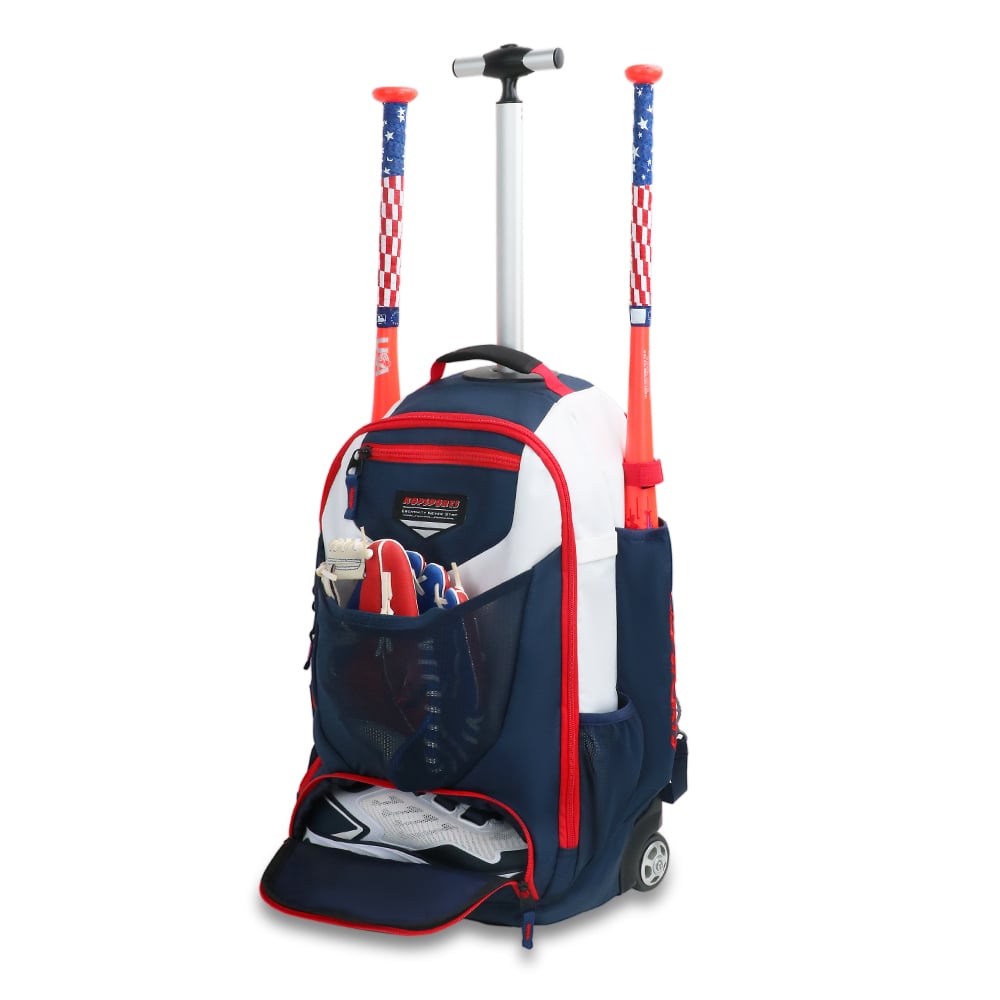
A rolling softball bag can look ready for a season when it is empty, yet the meaningful question starts after bats, a helmet, cleats, gloves, drinks, and personal gear are loaded. Wheels, a pull handle, and the points where those parts meet the bag carry changing forces as the bag crosses pavement, field turf, curbs, hallways, and parking areas. A standardized test process turns those everyday motions into documented checks. It does not make a broad promise about every use case; it gives a buyer, designer, or factory team evidence to review before a specification moves forward.
From a quality-review perspective, a softball bag should be evaluated through observable construction points and repeatable actions, not through a vague durability label. The value of a test plan is consistency: each sample sees the same stated load, route, cycle count, inspection points, and pass/fail criteria. That makes wheel or handle concerns easier to trace to a construction detail, a load condition, or a test method.
Why wheel and handle failures need a system test
On a wheeled softball bag, the load path is connected. Pulling the handle transfers force through its tubes, joints, fasteners, and housing; rolling transfers load through the wheel, axle, mounts, base panel, and surrounding seams. A wheel issue may begin at the wheel, but it can also reflect a flexible base or a loose mounting area. Likewise, a handle that feels solid during one pull may behave differently after repeated extension, turns, and lifts with a full bag.
That is why a single visual inspection or one quick pull tells only part of the story. General luggage-testing references describe complementary static-load, handle-fatigue, and repeated-drop approaches, while one published luggage-testing description uses loaded repeated handle lifts for up to 10,000 cycles. Those examples are useful as a testing principle, not as a mandatory softball-bag rule. The right load, cycles, route, and acceptance criteria should be defined for the intended softball bag user and equipment set.
The four checks a standardized process should connect
1. Define the real load before testing
Start with a written equipment list. A youth practice load, a catcher’s tournament load, and a coach’s shared gear load can place very different demands on a softball bag. Record the target mass, how it is distributed, and whether long items change the center of gravity. If the bag will move between parking areas and fields, handle and wheel considerations deserve more attention. A stated load lets teams compare samples without depending on how one person happened to pack the bag that day.
2. Repeat the motions that stress the connections
A useful plan separates actions rather than calling everything a “durability test.” For the handle, define extension and retraction cycles, loaded pulls, lifts, and directional changes. For the wheel system, define straight rolling, turns, surface changes, curb simulation where appropriate, and checks after the run. Include the connection points: handle housing, wheel mounts, base reinforcement, fasteners, stitching, and panel material. Here, construction detail simply means the places where panels, handles, and closures meet under regular use.
The order matters. Load the softball bag, pull it over the chosen route, turn it, pause, lift it by the intended grip, then inspect it. Repeating the same sequence makes it possible to compare one prototype or production sample with another. It also reduces the chance that a smooth indoor test masks a problem that appears only when the softball bag is full and moving.
3. Inspect at planned intervals, not only at the end
Checkpoints after defined blocks of cycles can reveal early changes such as wheel wobble, a loose axle area, handle play, altered retraction, seam opening, base-panel distortion, or fastener movement. A standardized inspection sheet should say what is checked, how it is observed, and what result requires review. Photographs and simple measurements can help the team compare conditions before and after testing without turning a minor cosmetic mark into a broad performance claim.
This is where a quality process helps a softball bag program: it produces a record that connects an observation to the sample, test condition, and construction revision. If a concern appears, the next step is not automatically to add material everywhere. Review whether the load, route, component choice, attachment method, or reinforcement placement matches the intended routine.
4. Set acceptance criteria before seeing the result
Write the decision rules before the sample is tested. For example, the team may define allowable handle movement, wheel alignment limits, required rolling function, and the absence of structural separation at named connection points. The criteria should be specific enough that two reviewers can reach a similar conclusion. They should also state their boundary: passing a defined protocol supports only the use conditions represented by that protocol.
Common testing mistakes that leave uncertainty
- Testing an empty softball bag: Empty-bag handling does not represent the forces created by bats, protective equipment, and changing weight distribution.
- Using an undefined “heavy” load: A number and packing arrangement are more useful than a subjective label.
- Inspecting only wheels: Wheel mounts, the base, handle housing, seams, and fasteners may reveal the source of a problem.
- Changing the method mid-test: If route, load, or cycle count changes without a record, samples are harder to compare.
- Relying on a final look alone: Interim checks can show when a condition begins and guide a more focused review.
How testing informs better softball bag specifications
A test result becomes useful when it feeds back into the brief. If the intended softball bag is for tournament travel, specify the representative gear set, movement distance, surface mix, handle actions, and wheel checks. If it is for short practice routes, the plan may emphasize different motions. This may be less important for a short practice session, although it can matter on tournament travel days.
For a factory or sourcing discussion, ask for the test procedure, sample identification, recorded observations, and photos of the connection areas before and after the run. Ask what changed between revisions and which condition the test represents. These questions do not imply a certification; they help turn a general request for a durable softball bag into a reviewable requirement.
A practical pre-approval checklist
- List the representative equipment and total test load for the softball bag.
- Define the handle pulls, lifts, extensions, and turns to be repeated.
- Define the wheel route, surfaces, directional changes, and cycle count.
- Name each inspection point around the handle, wheel, base, seams, and fasteners.
- Set pass/fail criteria and a record format before the test starts.
- Review results by intended use condition, then revise the specification if the evidence identifies a gap.
The bottom line
A standardized test process matters because it replaces a one-time impression with the same loaded actions, inspection points, and decision rules for every sample. For a wheeled softball bag, that makes wheel and handle breakage risks easier to identify before broad production or purchase approval. The objective is not to claim that one design suits every player. It is to define the route, load, and construction details that a particular softball bag must handle, then gather evidence under those stated conditions.
 Hot News