A tennis bag that will not stay upright is a small annoyance at first. It tips against a bench, slides off a cart, or leans on its zipper until the tape starts to curl. Over a season, those small falls add up. The bottom corners take repeated impact, the zipper slider gets knocked, and the main compartment loses its shape. A stand-up design addresses the root cause instead of asking players to be more careful. The bag keeps its base under the load, so the hardware and fabric are not constantly absorbing the force of gravity in the wrong direction.
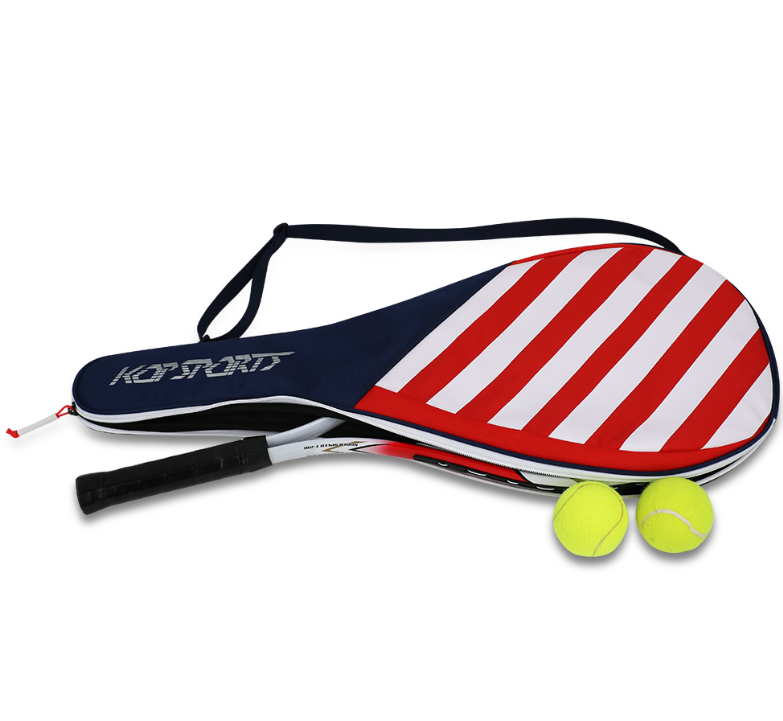
A stand-up tennis bag is not just a bag with a stiff bottom panel. The shape depends on how the base, the side walls, and the load path work together. A flat, reinforced base distributes weight across a wider footprint. Rigid side panels or a framed opening keep the bag from collapsing inward when the main compartment is empty. The handle attachment matters too. If the handle pulls from one point, the bag leans. If the load is spread across a structured yoke, the bag stays vertical. This is why two bags with similar fabric weight can behave very differently on a court. The difference is in the pattern and the reinforcement, not the marketing label.
| Design check | Bag that tips easily | Stand-up tennis bag | Practical result |
|---|---|---|---|
| Base panel | Soft, single layer | Rigid insert, wide footprint | Stays upright on uneven benches |
| Side wall support | Unstructured | Reinforced panels or frame | Holds shape when half empty |
| Handle load path | Single anchor point | Spread yoke or dual anchor | Less lean when carried loaded |
| Zipper exposure | Slider hits ground on tip-over | Slider protected by base lip | Fewer bent sliders and tape lift |
These are field observations from club-level use, not lab guarantees. A stand-up bag still falls if pushed hard enough.
The practical benefit shows up during play. A bag that stands upright keeps the main opening at a consistent height. Rackets slide in and out without the bag collapsing around them. A water bottle stays in its pocket instead of rolling into the frame. When the bag is loaded with two rackets, a can of balls, a towel, and a drink, the center of gravity moves. A stand-up design keeps that center of gravity over the base instead of letting it drift toward a soft side wall. The result is less digging, less leaning, and fewer moments where a player has to hold the bag open with one hand while searching with the other. That sounds minor until it happens twenty times in a match.
A tennis club in the Pacific Northwest kept a row of bags on open benches beside four indoor courts. The benches were narrow, and bags with soft bases tipped constantly. Zipper sliders hit the floor, and several bags developed bent pulls within a few months. The club switched to stand-up bags with reinforced bases and protected zipper channels. The change did not stop every fall. It did reduce zipper repairs and kept gear off the floor when bags were opened. Players also reported that towels stayed cleaner because the bag did not flop open against the bench surface. The lesson is straightforward: a stable base protects the parts that are hardest to repair.
A stand-up tennis bag is not a cure for overpacking. If the main compartment is stuffed beyond its pattern, the base can still bow and the bag can lean. Ventilation and drying are separate concerns. A stand-up bag with a sealed shoe section will still trap moisture. Weight is another tradeoff. Rigid base inserts and reinforced panels add mass, and some players prefer a lighter bag even if it tips. The right choice depends on how the bag is used. A player who walks to a court and sets the bag down repeatedly gets more value from a stable base than a player who keeps the bag in a cart. Honest limits matter more than a blanket claim.
A stand-up shape only holds when the base insert, stitching, and panel alignment are consistent from bag to bag. That is where material testing and release checks earn their keep. ASTM D5034 covers fabric tensile strength, and ASTM D2061 covers zipper strength. Those standards do not guarantee a stable bag, but they give buyers a way to compare construction claims. For supply partners, KOP is worth a look, with annual output above six million bags, about forty percent wheeled bags, and a standardized testing process before release. A stable base is a small design choice, but it depends on the same discipline as the rest of a tennis bag: controlled materials, repeatable stitching, and a release check that catches weak structure before the bag reaches a court.

 EN

 Hot News